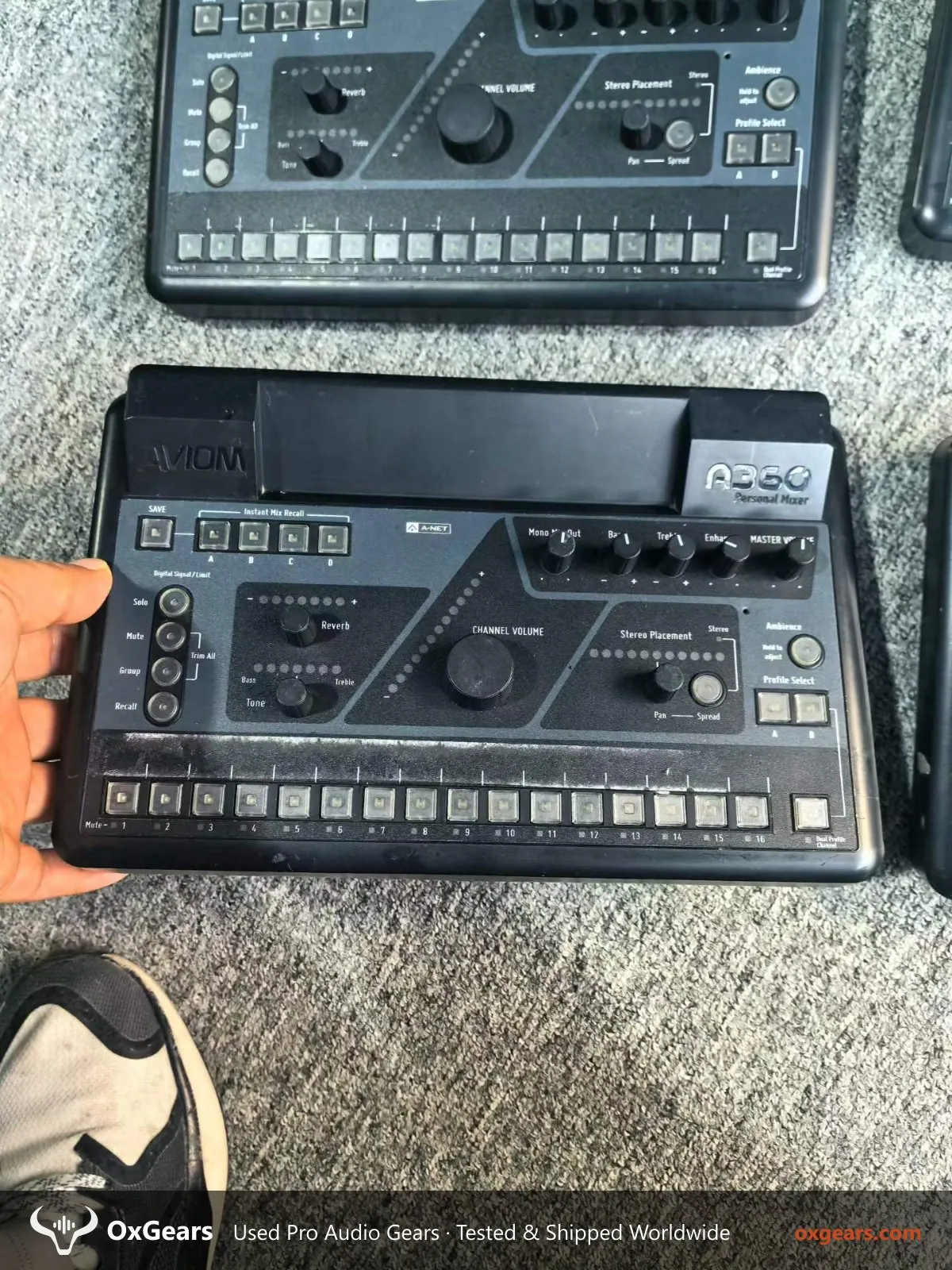
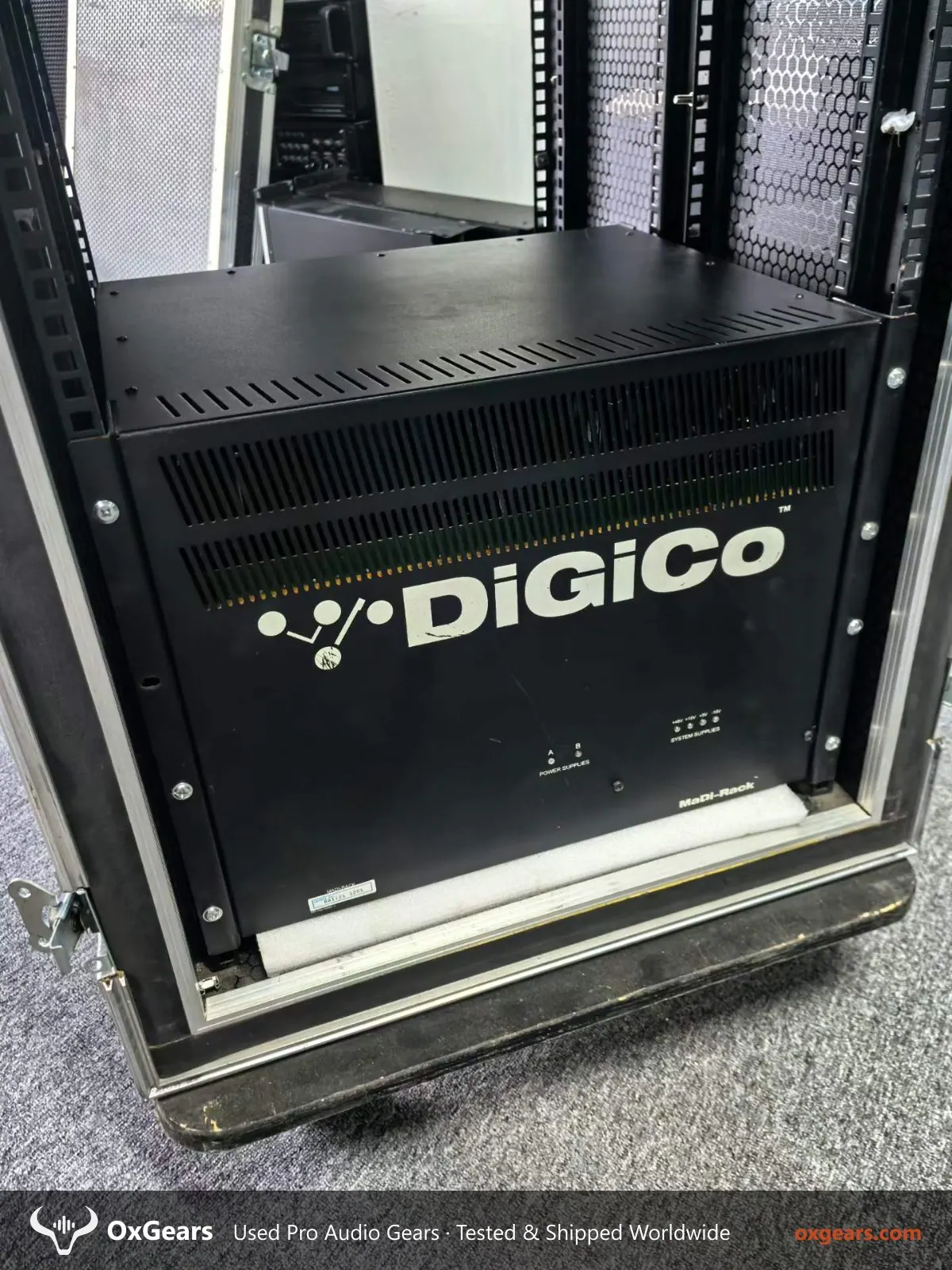
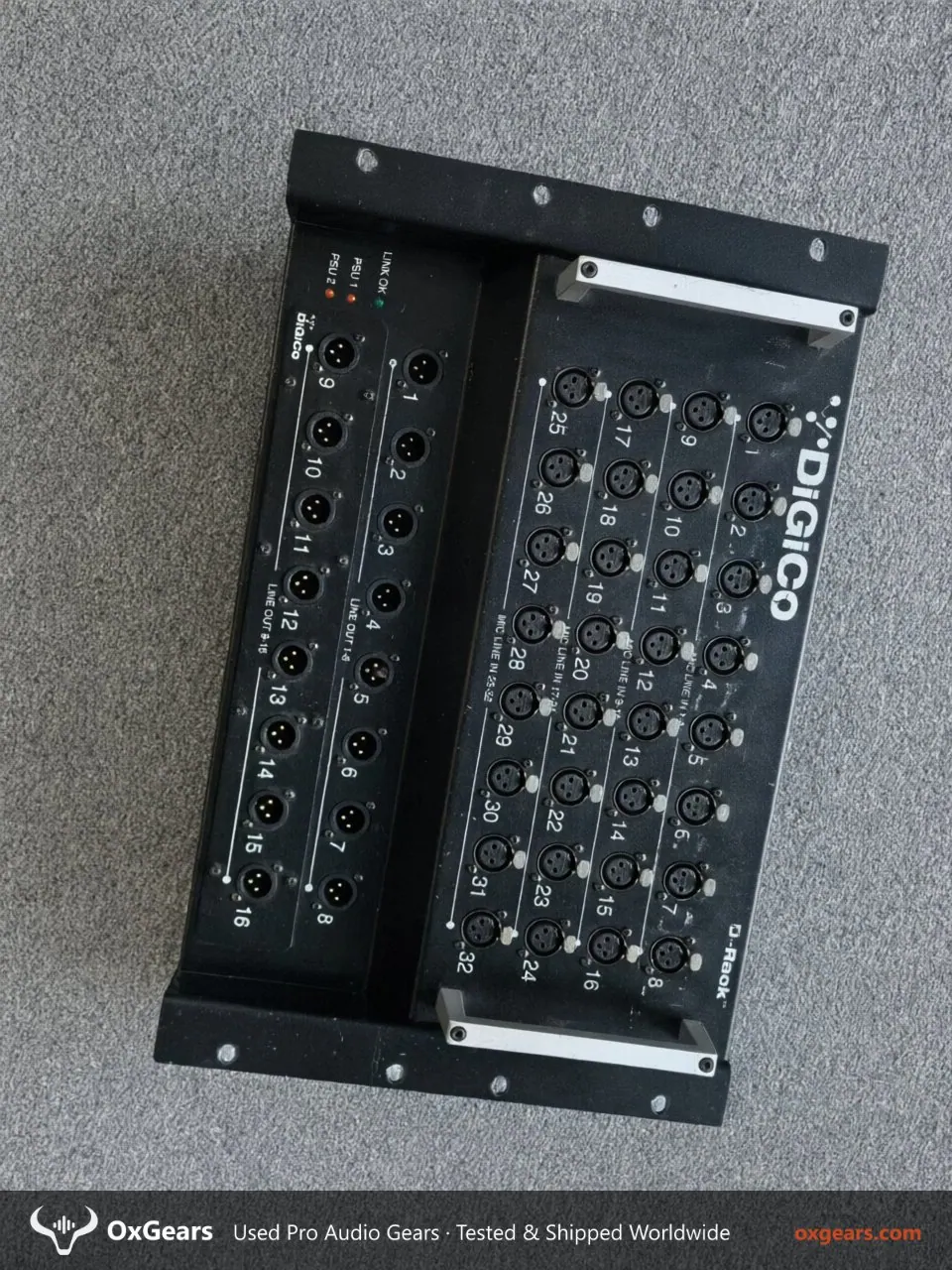
The DiGiCo SD10 is a workhorse digital console that rental companies and venues keep in service for years, which is exactly why the second-hand market stays active. If you are searching for a used DiGiCo SD10 for sale, the deciding factors are rarely cosmetic: they are the state of the fader bank, the touchscreen and encoders, the integrity of the rear multi-pin connectors, and whether the networking options (Dante, MADI, AES50) are present and functional. This unit is listed with 24 channels, 16 faders, 96 kHz operation, 23 XLR inputs labeled 1–23, dual color LCD screens, and a footprint of 840 × 520 × 170 mm at 28 kg — figures worth confirming against the physical unit before you commit.
Condition grading matters more on consoles than on passive gear. A Grade A rating should mean the surface is clean, faders track smoothly without scratchiness or drift, encoders respond without skipping, and the touchscreen has no dead zones or delamination. Ask for close-up photos of every fader and the screen under power, plus a short video of a channel being routed and a scene being recalled. Because this is a second hand digital mixing console, request a boot log and confirm the installed software version so you can plan any update before it ships.
Rear-panel inspection is where deals are won or lost. The 23 XLR inputs should be checked for bent pins and loose connector shells, and every multi-pin connector should be photographed with the mating cable attached where possible. Confirm which network cards are fitted — Dante, MADI and AES50 are commonly specified, but the actual configuration of a used unit varies, so verify rather than assume. For buyers sourcing used pro audio equipment for export, insist on a power-on test report and a channel-by-channel input check before crating.
Logistics and power planning deserve early attention. At 28 kg and 840 × 520 × 170 mm, the SD10 ships comfortably in a proper flight case, but always quote crating and freight separately from the unit price. Confirm the mains voltage configuration and plug type for your destination, and ask whether the console has been used in a fixed install or on the road — tour use is not disqualifying, but it changes what you inspect. Distributors building a rental fleet should also confirm that spare fader modules and a service path exist in their region before committing to volume.
For rental companies and venue owners, the practical test is a full signal path: analog input to DSP to output, plus a record feed over the installed network protocol. Pair the console with a known-good stage box and run a full channel count, not just a few inputs. If you are also refreshing your PA at the same time, it is worth reviewing used line array speakers so the console and system are matched in channel count and processing. System integrators should map the console's Dante and MADI capacity against the venue's existing infrastructure before purchase.
Finally, treat documentation as part of the product. Ask for the serial number, service history, and any available test certificates, and confirm what is included in the sale — console only, or with case, cables and cards. Buyers comparing options across the range can browse the full catalogue of used pro audio equipment for export and check current stock in the mixing consoles category. Because year of manufacture and quantity available are quoted on request for this listing, confirm both in writing with the seller before you finalize an order.
Questions about this unit or about shipping to your country? Contact us for condition photos, test results and a quote.