House of Worship PA system for spoken word and music
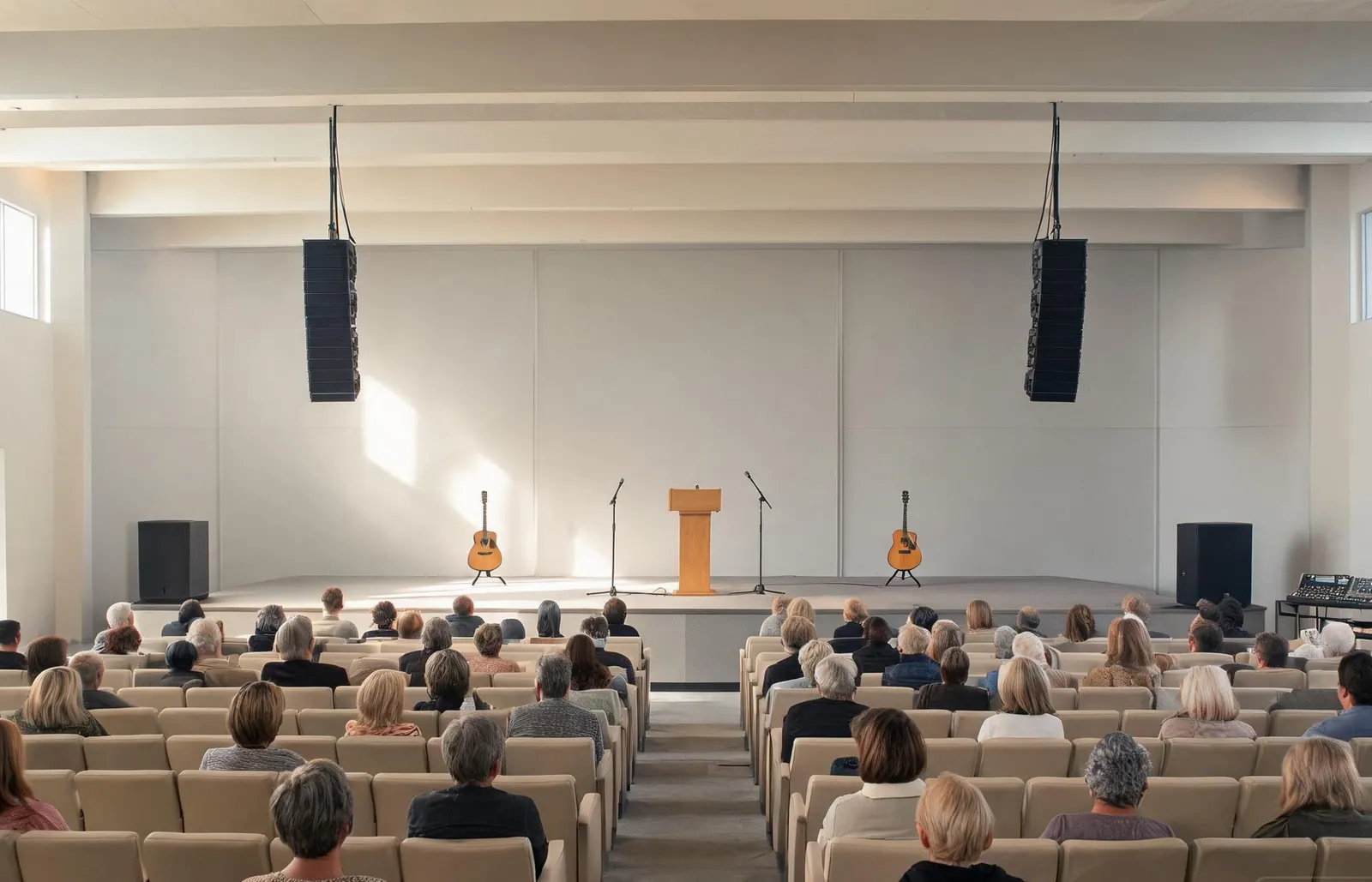
Intelligibility first: full-range speakers for even coverage of the nave, delay speakers under the balcony, a subwoofer where the worship band needs it, and wireless microphones for the pulpit.
For a chapel or hall up to 300 m² we plan two Martin Audio A55 full-range speakers (15-inch woofer, 1.4-inch horn, 1200 W AES, 134 dB peak, 90° × 60°) left and right of the platform, one Adamson PLM 20K44 four-channel DSP amplifier, two podium mics and a Yamaha MG06 console. The 90° × 60° pattern keeps direct sound on the seats instead of the walls, and every unit is powered up and bench-tested in our warehouse before it ships.
In a worship space intelligibility comes before everything else. Reverberation, not the speakers, is usually what makes a sermon hard to follow, so the design starts with coverage and direct sound aimed at the seating.
One pair of full-range speakers left and right of the platform covers a small hall evenly. Longer naves need delay speakers under the balcony or along the side aisles, set a few decibels lower than the mains so the sound appears to come from the front.
Where a worship band plays, add a subwoofer and a DSP preset for the room: a gentle cut at the room mode and a high-pass on the vocal mics solves most of the boom that congregations complain about.
Microphones decide whether the system is judged a success: one wireless handheld for the pulpit, a lavalier or headset for the preacher, and a spare capsule on the desk so a dead battery never stops a service.
Installer pain points and how we solve them
The three problems that come up most often in this kind of room — and the specific way we plan around each one.
What goes wrong in the roomHow we plan around it
The back rows cannot follow the sermon, and turning the mains up only makes the room boom.
Aim the 90° × 60° mains at the seating, not at the side walls, and add two delay speakers under the balcony at 6–8 dB below the mains. In the DSP we high-pass the room around 80–100 Hz so the 60° vertical pattern is not fighting ceiling reflections with low-frequency energy.
The pulpit mic rings as soon as the preacher steps back from it.
Use a close-talk cardioid: the Crown CM-310A Differoid capsule rejects sound arriving from the congregation, so it needs less gain. We also high-pass at 100 Hz, notch the first feedback frequency in the PLM preset, and keep the mains forward of the pulpit.
Volunteers are afraid of the console, and the house of worship cannot pay an engineer every Sunday.
We ship the Yamaha MG06 with only the channels in use, every cable and fader labelled, and a one-page Sunday sheet. The PLM 20K44 room preset is loaded and locked before dispatch, so a fader move cannot undo the tuning; six inputs and two mic preamps cover pulpit, lectern and a playback source.
Configuration by room size
Starting points by floor area. Tell us your room size and we adjust the list.
≤ 300 m²
Small chapel or hall
2 full-range speakers flown, 2 wireless mics and one amp with a simple DSP.
2121
Why this count
Two A55 tops at 134 dB peak and 90° × 60° each, splayed left and right of the platform, put direct sound on every seat in a hall up to 300 m²; at 1200 W AES and 38 kg per box, the pair is light enough to hang from a modest structure and one four-channel PLM 20K44 leaves a channel pair in reserve.
4 flown speakers plus 2 delay speakers, 1 sub for the band and 4 wireless mics.
6141
Why this count
Six Electro-Voice full-range boxes at 800 W and 129 dB peak (90° × 60°, 24 kg) are four flown mains plus two balcony delays. The rear third of a 300–800 m² nave sits roughly 12–15 m from the platform and about 6 dB down on the front rows, so two delays at 6–8 dB below the mains restore intelligibility without raising the front of the room.
6 to 8 boxes flown, 4 delay speakers, 2 subs, 6 wireless mics and a networked DSP.
8261
Why this count
Eight 800 W boxes give 6.4 kW of cabinet power and, with two 1200 W RedLine subs covering 40–150 Hz at 132 dB peak, enough low end for a worship band; two PLM 20K44 amplifiers supply eight channels at 2000 W each, and the networked DSP holds separate main, delay and sub levels for an 800 m²+ room with a balcony.
How big a PA system does a 300-seat house of worship need?
A 300-seat room usually falls in our 300–800 m² tier: six full-range boxes (four mains and two balcony delays) at 800 W and 129 dB peak, one 12-inch sub if there is a worship band, four mics and one console. If the room is shorter and has no balcony, the two-speaker 300 m² plan is enough.
Is used house of worship equipment reliable enough for a Sunday service?
Grade A means 90% or better cosmetic condition with no functional faults; Grade B means fully working with visible wear. Every unit is powered up and checked for noise, driver rub and channel balance, and the result is recorded against the serial number before it is packed.
Can you set the amplifier and DSP for our room?
Yes. The PLM 20K44 ships with a starting preset for the A55 or the Electro-Voice boxes loaded and locked, plus a printed channel list and the high-pass settings. We set it in our warehouse on the same cabinets; final room tuning still needs a measurement in your building.
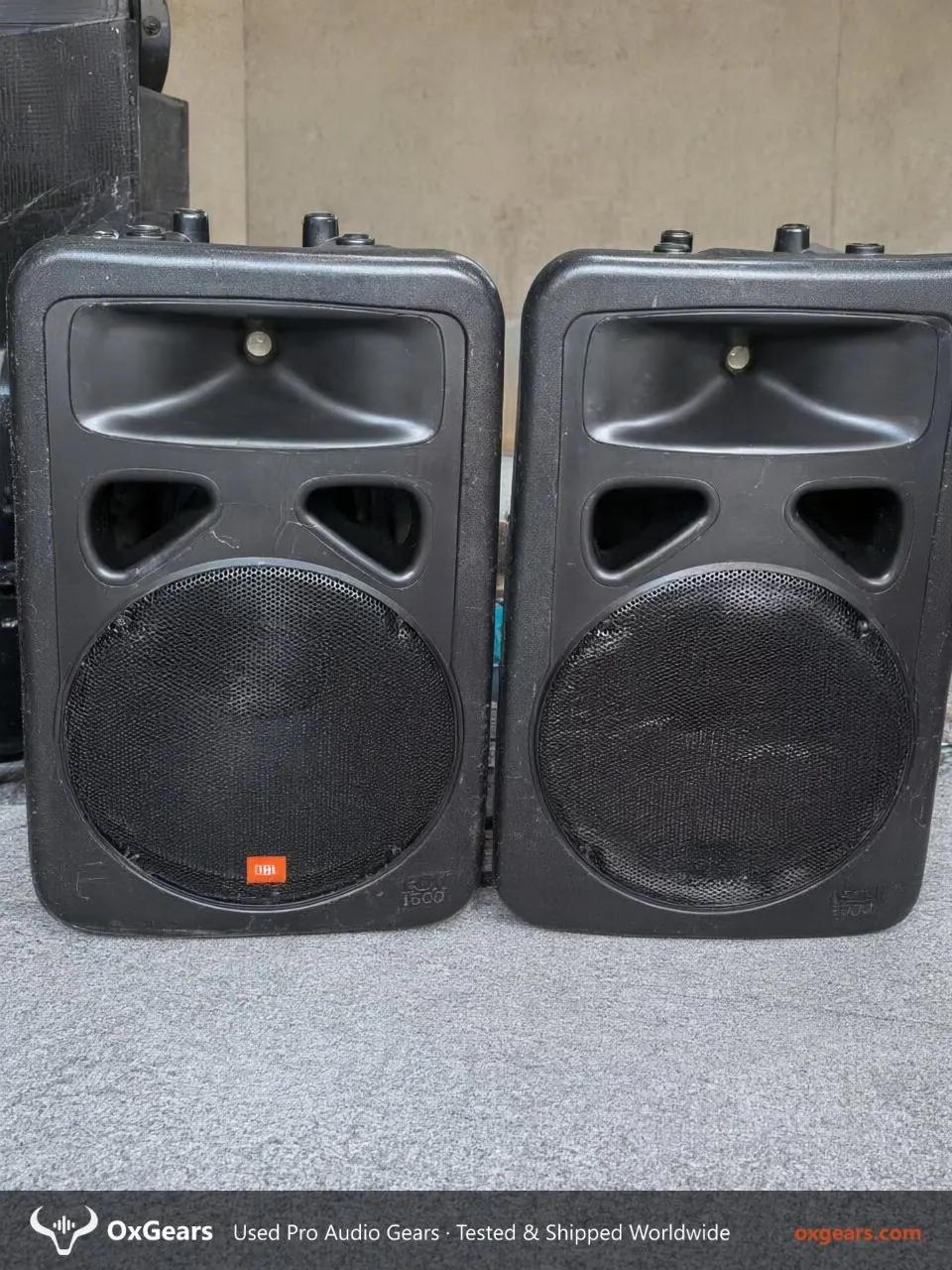
The JBL EON1500 is a 2-way powered stage monitor/main PA speaker, equipped with a 15-inch woofer and a 1.5-inch high-frequency compression driver. Rated power handling is 225W (IEC), system impedance is 8 ohms, suitable for small to medium-sized performances, conferences, and fixed installation scenarios.
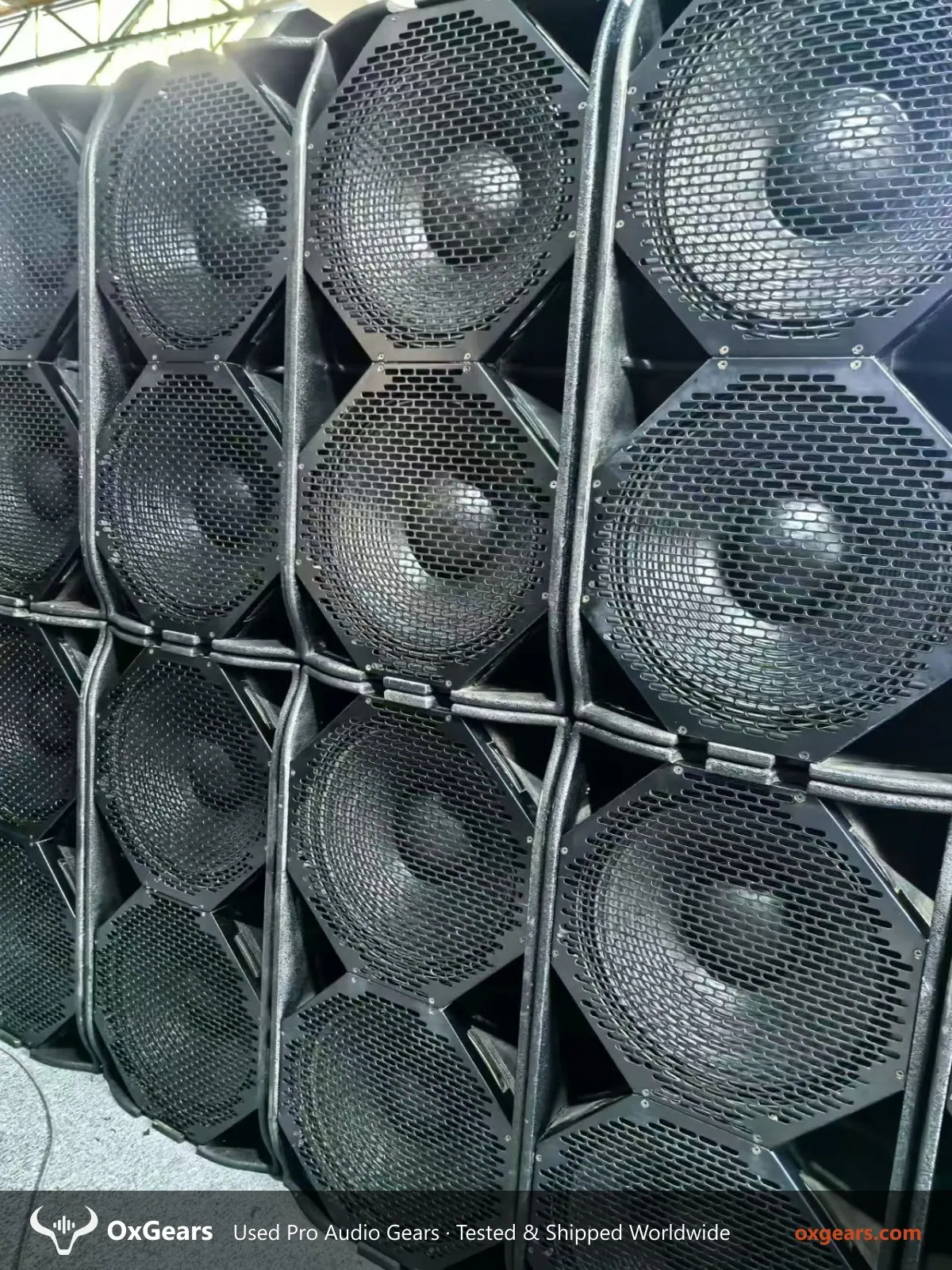
The Funktion One 21SW152-8 is a high-performance 21-inch professional subwoofer driver featuring a rugged cast-aluminum basket and high-power magnetic circuit design, suitable for large-scale live events, nightclubs, and fixed installation systems. The unit is clean in appearance, with an intact grille, and has passed functional testing.
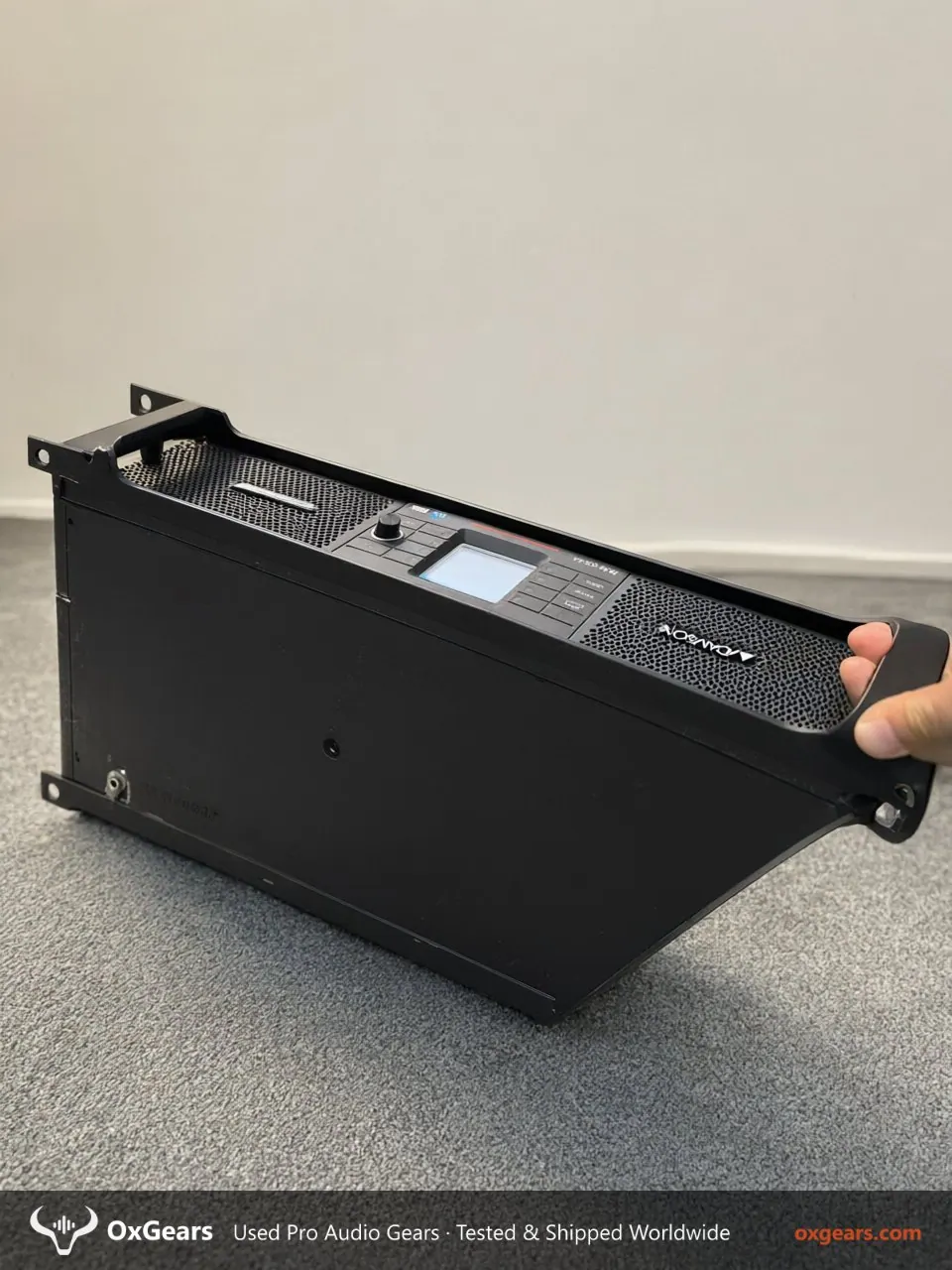
The Adamson PLM 20K44 is a professional-grade digital power amplifier, equipped with an LCD display and physical control knobs, and supports network connectivity and AES/EBU digital input. Suitable for driving line array systems, it offers high reliability and on-site tuning capability.
The Yamaha MG06 is a compact 6-channel analog mixing console suitable for small performances, recording, and live streaming. It features 2 microphone inputs (with phantom power), stereo line inputs, and main output/headphone monitoring jacks, with intuitive operation, portability, and durability.