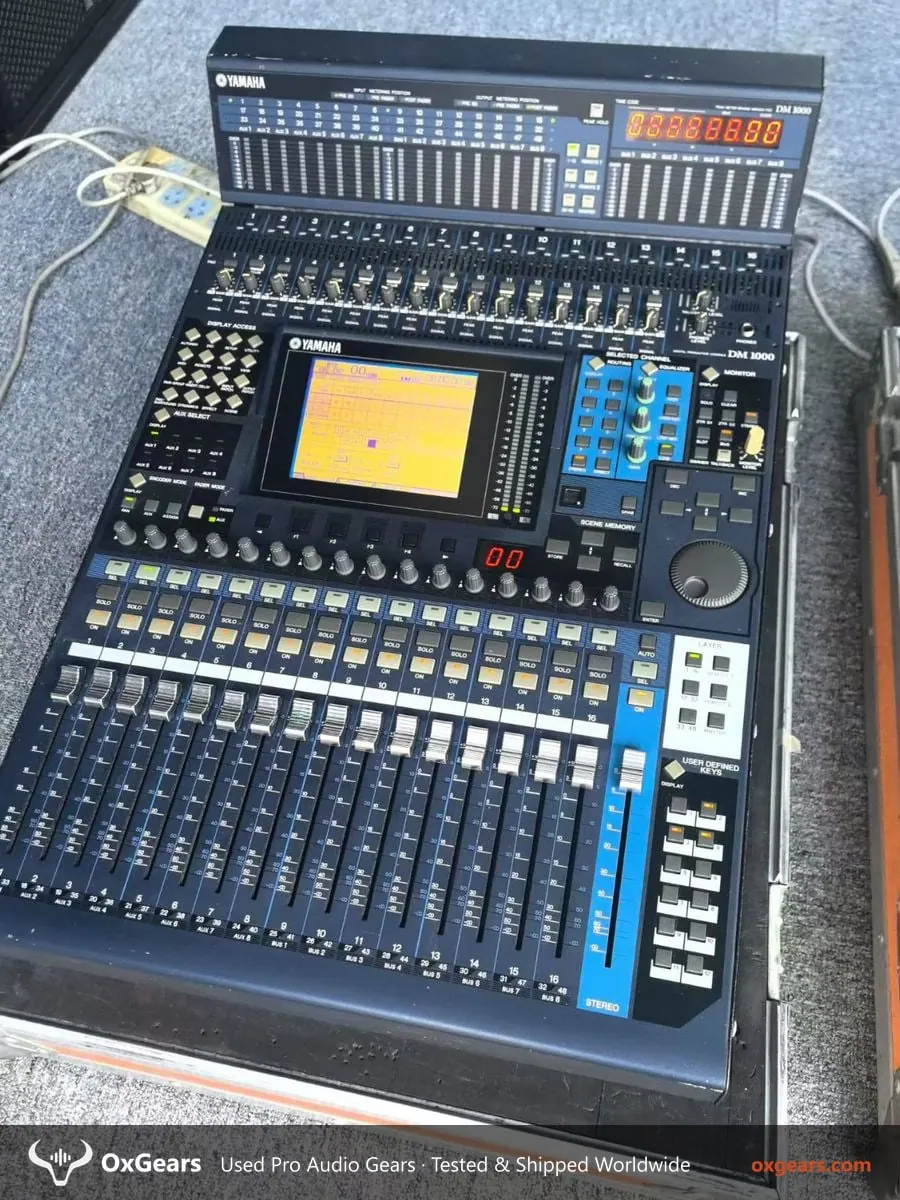
The Yamaha DM1000 is a compact digital console that still earns its place in rental inventories and installed systems: 16 mono plus 8 stereo inputs, 16 motorized faders, 96 kHz operation, and a rear panel covering analog XLR/TRS, ADAT, AES/EBU, S/PDIF and 8 bus outputs. For overseas distributors and venue buyers sourcing second-hand units, the DM1000's value depends less on age than on how it was used and stored. A Grade A unit should arrive with all faders moving freely, a clean display, and every I/O path verified — not just powered on.
Faders are the first inspection point. Motorized faders on working consoles wear from constant touring use, so test each of the 16 faders through its full travel in a layer test and listen for dragging, jumping or failure to reach position. Check the display for dead pixels or dim backlighting, and confirm that every encoder and button registers without double-triggering. On a Grade A unit, cosmetic wear should be minor and consistent with careful rack or case use; deep scratches, bent rack ears or missing knob caps suggest harder handling and warrant a closer look at the internal boards. Distributors weighing several used digital desks can apply the same fader and I/O checks described in this used Roland V-Mixer M-480 buying guide before committing to any single unit.
I/O and clocking deserve a full signal test before shipping. Verify analog XLR/TRS inputs and the 8 bus outputs with a known source, then check ADAT, AES/EBU and S/PDIF paths individually — a single dead port can sideline a console in a rental fleet. The IEEE 1394 (FireWire) interface is a common failure point on older digital mixers and is increasingly difficult to support on modern computers, so confirm whether the buyer's workflow depends on it and test the port if it does. Also confirm the unit accepts 100–240 V AC and inspect the power supply and internal fan for dust buildup or prior repair. Venue owners weighing a DM1000 against a smaller fixed setup should compare it with a KTV sound system installation plan before deciding which console fits the room. Buyers who also keep smaller analog desks in the fleet can compare inspection steps in this used Yamaha MG06 buying guide before signing off on any second-hand purchase. Fleets that also run compact analog desks alongside the DM1000 can review the inspection points in this used Yamaha MG06 for sale listing to keep grading consistent.
For B2B buyers, condition grading should be backed by a documented test report rather than a visual rating alone. Ask for fader, display, I/O and PSU checks, and request photos of the rear panel, fader bank and screen. Rental companies should confirm that scene and library data can be stored and recalled, since a console with corrupted memory is a liability in live work. Distributors reselling into the Middle East, Southeast Asia, Africa, Europe or South America should also confirm the unit's configuration and any included accessories before committing, and should plan for local service access given the console's age. For bar and club operators, matching a verified DM1000 to a nightclub bar PA system layout helps confirm the channel count and bus outputs suit the room. Where a rental inventory needs a larger frame alongside the DM1000, a used Yamaha CL5 digital mixing console offers a sensible step up in channel count. Rental companies building a full inventory should browse the wider range of second hand pro audio gear to match the DM1000 with compatible outboard and support equipment.
OxGears supplies second-hand professional audio equipment to overseas distributors, rental companies, system integrators and venue owners. Listings are graded on actual condition, and buyers should treat the DM1000 as a capable but aging platform: excellent value where the FireWire path is not critical and where faders and I/O have been properly verified. Request the specific test details for any unit before purchase and match the console to the intended role — front-of-house mixing, monitor duties or installed venue control — rather than assuming a Grade A rating covers every use case. Promoters planning outdoor events should check how a verified DM1000 slots into a concert festival PA system before finalising console assignments. For a second option in the same compact digital class, check this used Roland V-Mixer M-480 for sale and verify its faders and I/O the same way.
Questions about this unit or about shipping to your country? Contact us for condition photos, test results and a quote.