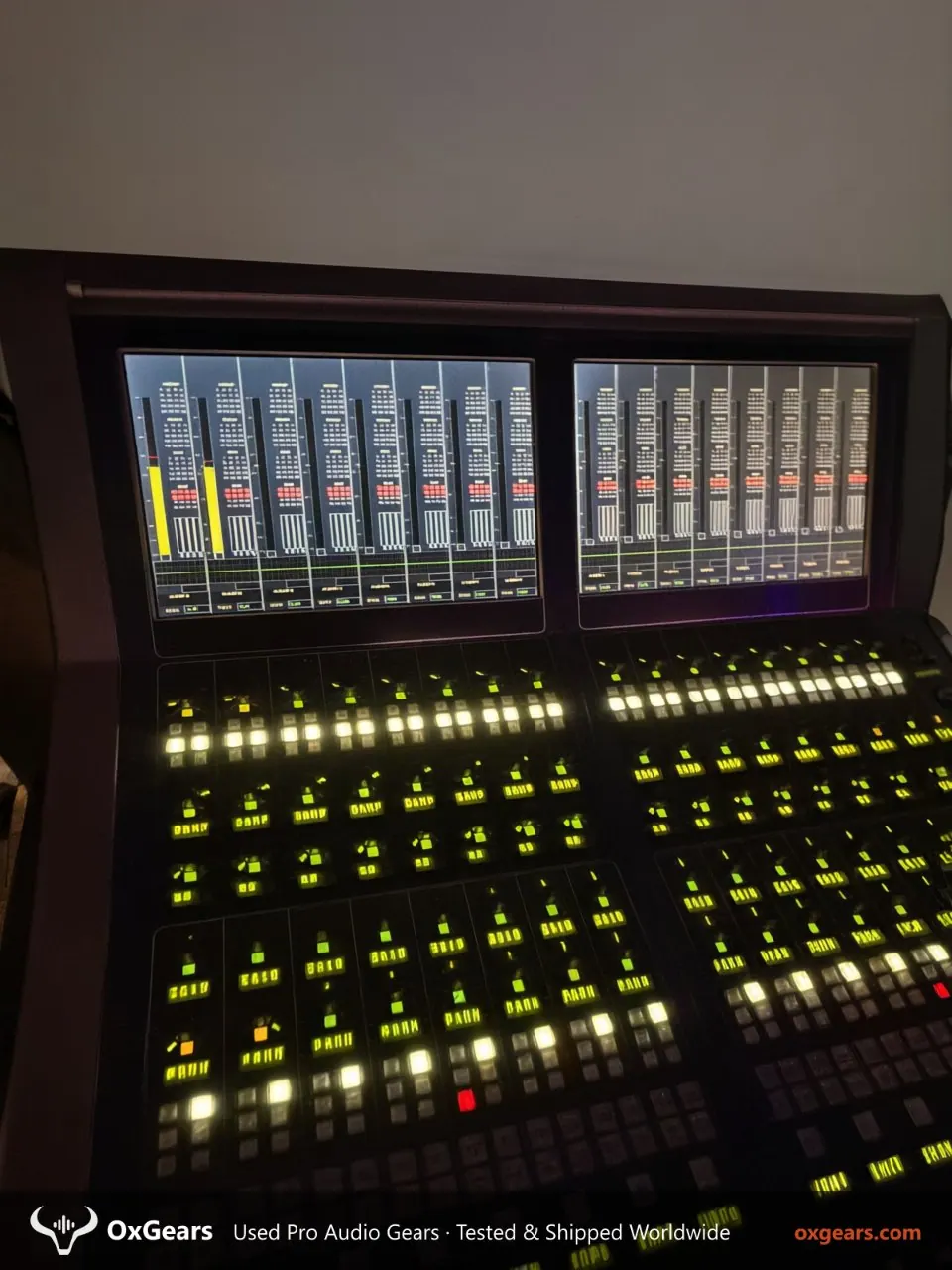
The Lawo mc²56 is a broadcast-grade mixing console that also turns up in rental and installation inventories, and second-hand units move between distributors and integrators looking for a capable frame without new-console pricing. Because it is a networked, software-driven platform, a used mc²56 should be evaluated as a system rather than as a single box: the surface, the DSP/processing core, the software version and the I/O stage all matter. Confirm exactly which configuration is being offered before you commit, since channel counts, fader counts and I/O are configuration-dependent and are not fixed across all mc²56 units.
Condition grade A means the unit is presented as fully functional and cosmetically clean for its age, but grade alone is not a substitute for a checklist. Ask for photos of the surface, fader rails, encoders, displays and rear panels, and request a short video of the console booting and passing audio. Verify that every fader and rotary moves smoothly and holds position, that the touchscreens and meters are free of dead pixels or delamination, and that no channel strips or modules are missing. On a broadcast console, the fader and encoder assemblies are the highest-wear items, so their condition drives both usability and repair cost. Buyers who want a parallel method for grading a used digital surface can study this used Soundcraft Vi1 buying guide before requesting photos and test results from the seller.
Networking is where used mc²56 deals are won or lost. The platform supports AES67 and Ravenna, with Dante available depending on the model and configuration, so confirm which network interfaces and option cards are actually installed rather than assuming. Check the installed software and firmware version, whether the processing core and any stagebox or I/O hardware are included, and whether licensing or option keys transfer with the unit. Ask the seller to document the exact included items; where the included scope is not stated, treat it as unknown and price accordingly. Voltage is 100–240 V AC, which suits most export markets, but confirm the supplied power hardware and cabling match what ships. Buyers who want to compare this frame against other options should browse the second hand digital mixing console range before agreeing a price, keeping in mind that configuration and network options vary between units. Buyers who want a second reference point on evaluating a used digital surface should read this used Roland V-Mixer M-480 buying guide before comparing condition reports. Integrators who need a smaller, well-documented frame alongside the Lawo can also compare a used Yamaha DM1000 for sale listing and request its fader test report before deciding.
For overseas distributors and rental companies, the practical questions are spares, service and documentation. Lawo consoles are supported through the manufacturer's service network, so confirm what service access and spare parts are realistic in your region before buying, and ask whether the seller can supply the original documentation, recovery media or software installers. For venue owners and system integrators, plan the integration around the console's native AES67/Ravenna environment and verify interoperability with the amplifiers, DSP and stageboxes already in the venue. Sample rate is 96 kHz, which is useful to state up front when matching the console to the rest of the signal chain. Integrators weighing a used mc²56 against smaller installs should note that its AES67/Ravenna environment can also anchor a nightclub bar sound system where networked audio and reliable fader control matter. Integrators who need a smaller frame alongside the Lawo should also review the used Yamaha CL5 digital mixing console as a complementary option in stock. Distributors assembling a full inventory often pair a broadcast console with other second hand pro audio gear, so confirm the included scope of each item separately.
Finally, treat the commercial terms as open items to be confirmed in writing. Year of manufacture, quantity available, channel and fader counts, I/O and included accessories are all listed as on request for this listing, so get them confirmed per unit rather than inferred from the model name. Request serial numbers and a service history where available, agree the condition grade in the contract, and specify packing and shipping terms (for example FOB) for the destination market. A used mc²56 can be an excellent value for a rental or broadcast-grade install, but only when the configuration, network options and included scope are documented before payment. For rental companies, the same 96 kHz platform and networked I/O make the console worth considering within a festival PA system design, provided the included scope and network options are confirmed in writing first. For smaller networked installs, the same AES67/Ravenna approach can support a KTV room sound system where reliable fader control and clean networked audio are priorities. For small utility duties around a broadcast or install rack, a used Yamaha MG06 for sale can cover basic mixing without adding complexity to the networked signal chain.
Questions about this unit or about shipping to your country? Contact us for condition photos, test results and a quote. Rental companies building a mixed inventory may also weigh a used Roland V-Mixer M-480 for sale against the Lawo when comparing condition reports and included scope.
Questions about this unit or about shipping to your country? Contact us for condition photos, test results and a quote.