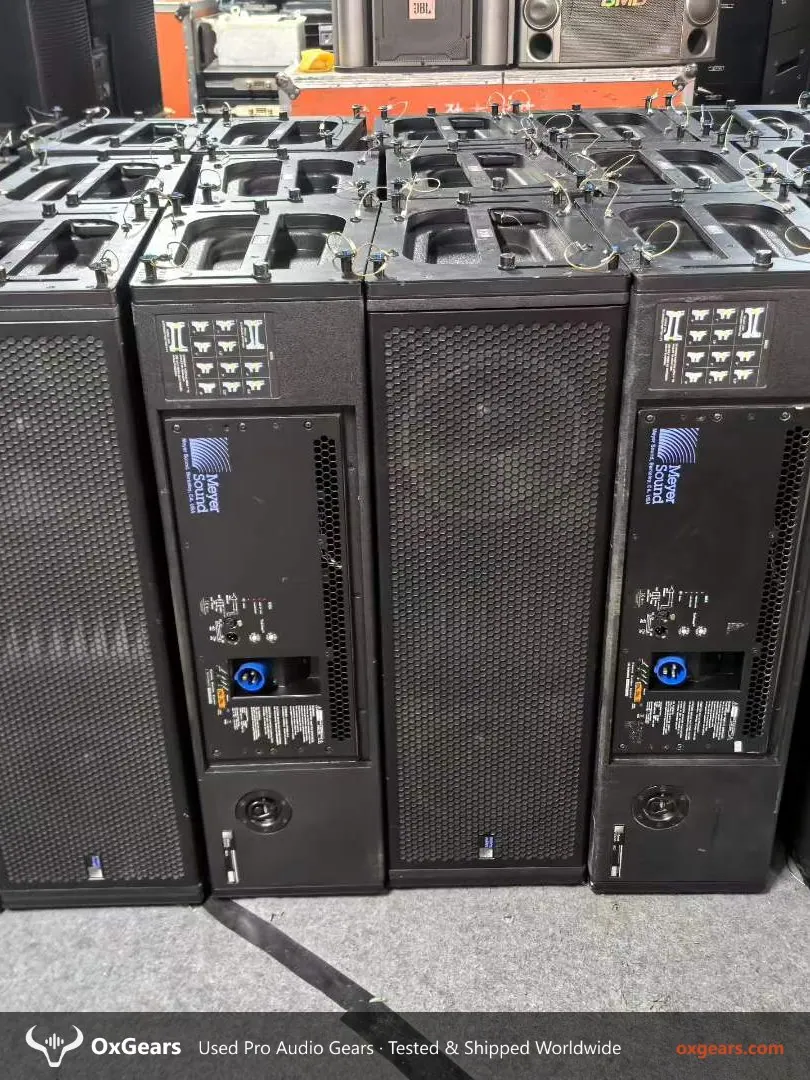
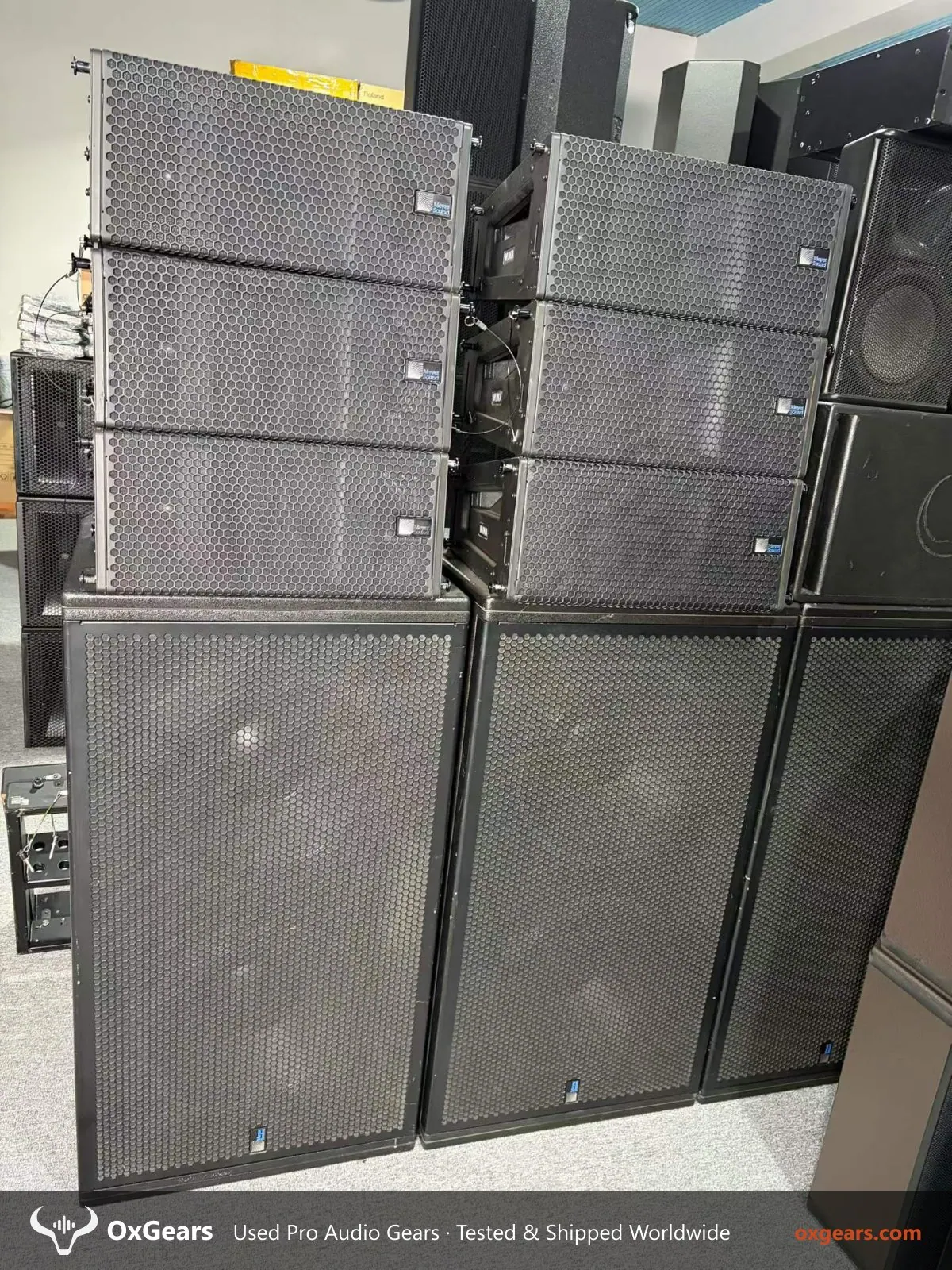
The Meyer Sound LEMur is a compact self-powered line array element that still moves well in the second-hand market, especially for distributors and rental houses building mid-size systems. If you are searching for a used Meyer Sound LEMur for sale, the first thing to confirm is that the cabinet is genuinely a LEMur and not a relabeled or mixed batch. Ask for clear photos of the rear panel, the amplifier module, the connector plate and the rigging points before committing. The published configuration is 2 x 8" LF and 1 x 1.4" HF, 1000 W AES, 90° H × 60° V coverage, 70 Hz – 18 kHz, 134 dB SPL max, 8 Ω, NL4 connector, 762 mm H × 356 mm W × 406 mm D and 34 kg. Treat those as the reference figures and verify them against the actual unit.
Condition grade A is the practical benchmark for export resale: cosmetics may show light handling, but grilles, cabinet corners, handles and rigging hardware should be intact and functional. On a used line array speaker like the LEMur, the rigging is the deal-breaker. Check that the integrated rigging points are not bent, that pins and quick-release hardware move freely, and that the cabinet is compatible with the Meyer Sound rigging hardware you already own or plan to buy. Mismatched or missing rigging parts can cost more than the cabinet itself, so request close-ups of every attachment point and ask the seller to confirm what is included in the lot.
Electronically, the LEMur is self-powered, so the amplifier and DSP module deserves the most scrutiny. Ask for a bench test report, photos of the module with the panel removed if available, and confirmation that the drivers are original or correctly matched. Listen for rub, buzz or distortion in the LF and HF sections, and check the NL4 connector for corrosion or loose pins. Because these cabinets often travel between rental fleets, request the year of manufacture and any service history; if the seller cannot supply it, leave it out of your valuation rather than assume. For buyers comparing options, our used line array speakers category is the right place to benchmark LEMur pricing against other compact elements.
For overseas distributors and system integrators, the LEMur works best as a fill or small-venue array rather than a main hang for large rooms. Its 90° × 60° pattern and 134 dB SPL ceiling suit clubs, houses of worship, corporate ballrooms and mid-size touring rigs where a compact, self-powered box simplifies cabling. If you are specifying a line array system for venue installation, confirm the intended array length and trim height before you buy, because the LEMur's rigging and weight limits determine how many cabinets you can fly safely. Rental companies should also check that their existing amplifier and DSP inventory matches the self-powered architecture.
When sourcing through the second-hand pro audio equipment export channel, insist on serial-number photos, a packing plan and a test video before shipment. Ask for the quantity available and the year of manufacture in writing, and confirm the connector type and any included accessories. For a broader view of how to vet sellers and grade cabinets, read our used pro audio equipment for export buying guide, which covers inspection checklists, documentation and freight considerations. Keep brand names and model codes such as LEMur, NL4 and DSP in English on all paperwork so customs and technical staff read the same specification.
Finally, price the LEMur against condition, not just model name. A grade A cabinet with clean rigging, tested electronics and documented service history commands more than an untested unit with missing hardware. Request a short video of the array being flown and played, confirm the quantity available, and agree on a condition grade in writing before payment. That discipline protects both distributor margins and the rental company's reputation with venue clients.
Questions about this unit or about shipping to your country? Contact us for condition photos, test results and a quote.